

2025 at a glance – How AI has changed things for us – Neovision
2025 Retrospective: Artificial Intelligence from Wave to Strategy – The Year Through the Eyes of the Neovision Team
2025, AI’s Defining Turning Point
After an explosive 2024 that saw AI spread everywhere, 2025 is the year technology became a strategy.
Models have matured, regulations have become clearer (thanks to Europe!), and AI has moved from the “Wow” effect to an indispensable performance tool. This is the moment for every company to understand what really mattered.
To decipher this eventful year, we gave the floor to our teams. Developers, project managers, and R&D experts—each chose a highlight from the news or the AI ecosystem that caught their attention and shaped our vision of Artificial Intelligence in 2025.
Ready for an overview? Let’s go!
The Rise of Generative AI
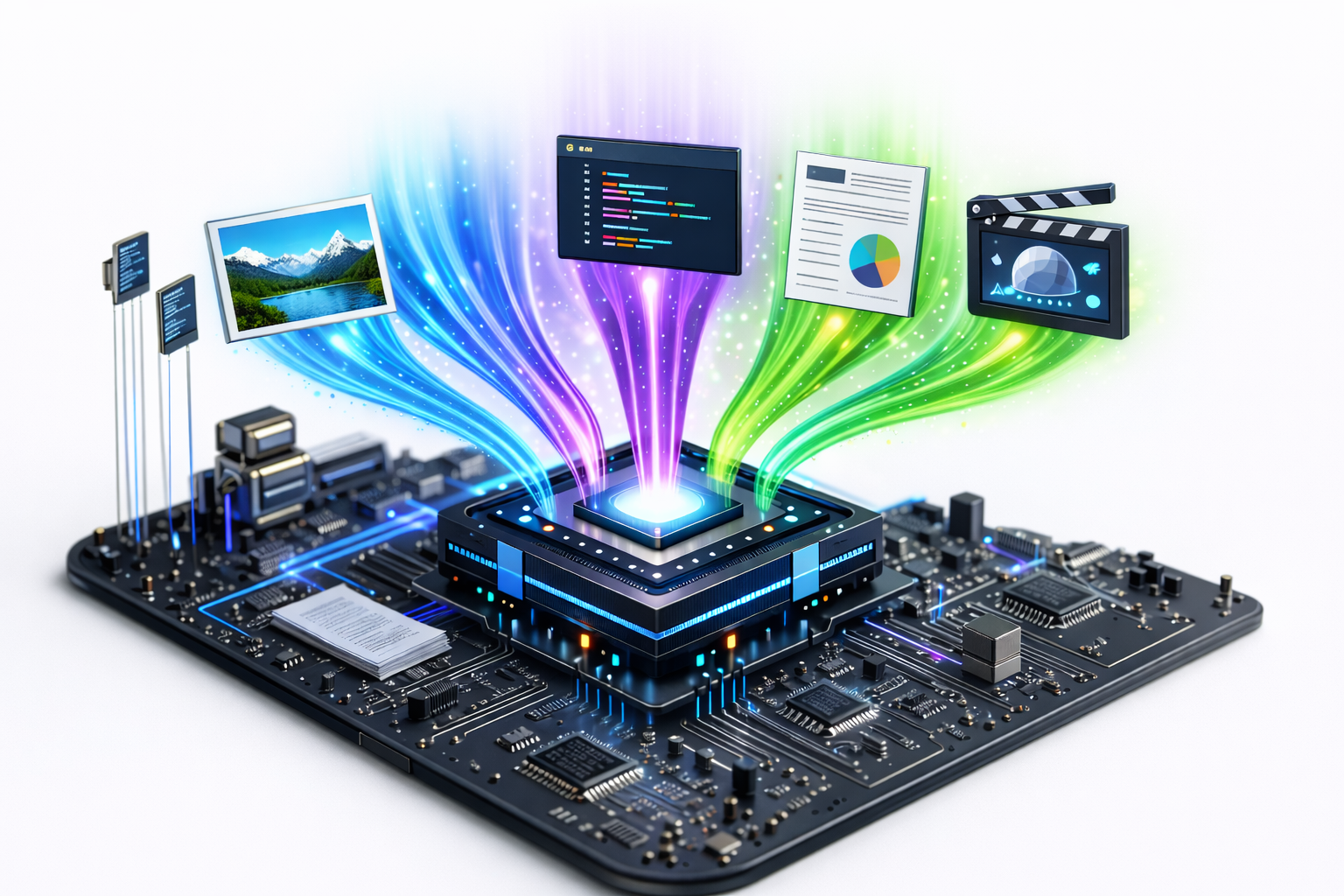
2025 has been the year of the rise of Generative AI (GenAI). Generative AI is everywhere, and everyone is either using it or seeking projects to create text, images, videos or code in seconds. This highlight is profoundly transforming the way we produce and collaborate.
This progression is notable because, in business, demand is growing and clients swear by it. It is also changing how we create, think and execute. The societal impact of this surge raises questions about information accuracy, while also bringing up ethical and training stakes for teams.
— Stacie
The Challenge of Independence: AI Becomes Sovereign
The availability of open-source and sovereign AI tools in Europe and France, along with the availability of sovereign hosting solutions. This movement addresses a fundamental strategic need for our countries and companies: it is essential that Europe and France reduce their dependence on foreign tech giants. We now have the arguments and the means to have our own ecosystem.
This shift is market-driven. While a majority of AI models are still hosted across the Atlantic, there is strong demand on the ground: clients specifically request French models hosted in Europe. The issue of sovereignty is paramount to managing long-term technological independence. This dynamic ensures greater commercial independence.
This movement toward sovereignty brings concrete benefits. It ensures greater commercial independence for companies. It also allows for better diversity and representativeness of AI models, while guaranteeing better respect for privacy and citizens thanks to the European regulatory framework.
— Louis

Audio Signal Processing: The Sector Where AI Still Has to Prove Its Strength

While Generative AI has made us accustomed to easy successes, the year 2025 has highlighted a field where technology still has to fight: audio signal processing.
Despite the evolution of models aimed at improving sound quality and voice audibility in recordings, the complexity of audio remains an immense challenge.
Why this resistance? Audio is much less standardized and more complex than text or images. It remains a major technical challenge on this new AI frontier. For Neovision, this is proof that we must remain very attentive to scientific research in this field.
Yet, the applications are vital and very concrete: voice enhancement is key in the military sector or for any profession with high ambient noise (industry, construction sites). This issue aims to improve recording quality, but also, more broadly, to protect the hearing of professionals.
— Arthur
Diella: When an AI Becomes a Minister in Albania
On September 11 in Albania, the Prime Minister appointed an AI (named Diella) to the rank of Minister in charge of making public procurement decisions.
The goal is to reduce, or even eradicate, corruption in the country and, ultimately, fulfill the conditions for its entry into the European Union. This is not the first time AI has been involved in public affairs, but it is indeed the first time a non-human entity is directly involved in government business.
This step marks a turning point in the place humans grant to technology and the trust they place in it. This subject is striking as it disrupts our societal and political paradigm.
Naturally, this announcement raised massive concerns. The introduction of AI no longer as a simple assistant, but as an entity with decision-making power, raises ethical, moral, and more broadly, democratic questions. This highlight is proof that AI has crossed a new threshold in 2025, forcing us to rethink the place of humans at the heart of power.
— Alicia

AI Enters the Boardroom: The AI Act and Governance are the New Strategic Stakes

AI has reached a new milestone: it has moved from developers’ desks to the Boardroom (COMEX) agenda. The defining fact is that the European AI Act, coupled with the geopolitical context, has transformed AI into a major issue of governance and sovereignty for companies.
In 2025, AI has become a strategic stake in corporate governance and sovereignty. With the AI Act and the geopolitical landscape, AI model supervision, regulatory compliance, and data security are finally integrated into the strategic choices of Executive Committees. We are also seeing growing interest in self-hosted models, allowing direct control over infrastructure and critical data.
This subject represents a turning point in AI maturity: it has evolved from an operational lever to a major strategic factor. Companies now measure the risks and value of their AI projects in terms of governance, compliance, and digital sovereignty. This is the moment when technology (via MLOps platforms) enables the implementation of ethical and responsibility guarantees. Neovision’s role is evolving into that of a strategic partner, rather than just a technical provider.
The implications are vast. Stricter AI governance guarantees the protection of personal data and fundamental rights. The development of self-hosted models and sovereign infrastructures reduces geopolitical dependence and strengthens national digital security. Finally, this rigor enables scaling: human supervision and strategic AI management become central, changing the collaboration between teams and technology, and allowing AI to move out of the Sandbox.
— Gaël
Reve: the image generation model
Reve, the image generation model on the LM Arena platform. Reve demonstrated staggering performance, causing a sensation among creative experts.
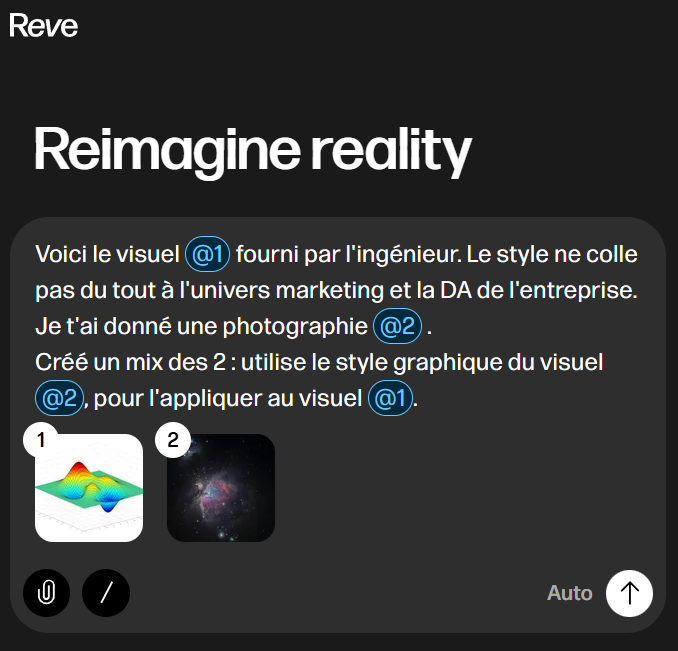
Reve was very surprising in terms of the quality of its generated rendering, its understanding, and its adherence to the prompt. Unlike many resource-heavy models, prompts do not need to be excessively long to achieve precise results. A significant bonus is that the model understands French very well. Where Reve particularly excels is in the finesse of its analysis of reference visuals. It doesn’t just pick a color palette; it goes as far as understanding texture, opening up immense creative possibilities. For each request, Reve generates four visual proposals that are distinct and offer varied creative paths.
The practicality of Reve’s interface is also a strong point. The model organizes all visuals (both reference and generated) into an album. This album functions like a conversation, similar to a history on ChatGPT. The user has the ability to “tag” or “mention” visuals by their number directly in their prompt. This feature is revolutionary: it eliminates the need to describe reference visuals or perform meta-prompting for the AI to understand which visual is being discussed. Furthermore, Reve allows for directly improving the resolution of generated visuals from the interface, a considerable time-saver in production.
— Débora
Reve Model Demonstration:

Agentic AI: Converging Visions of Autonomy
The LLM Glass Ceiling and Multi-Agent Architectures
We have reached a simple conclusion: increasing the size of a model no longer guarantees an improvement in its performance across all fields. According to many specialists, LLMs are now hitting a form of glass ceiling: beyond a certain point, gains become marginal while costs explode.
Research is now turning toward multi-agent architectures. The idea is no longer to rely on a single gigantic model, but on a constellation of smaller models, each specialized in a specific task.
These agents cooperate with each other, under the supervision of an orchestrator—often a slightly larger LLM—equipped with advanced planning and reasoning capabilities. The latter analyzes the user’s request, breaks it down into sub-tasks, and assigns them to the most suitable agents before aggregating and refining the results. This paradigm allows for more efficient systems, more modular, more explainable, and often higher-performing than a single monolithic model.
It is important to remain clear-headed about their use: these are tools that are not currently capable of acting completely autonomously or making decisions on their own. Yes, these systems will transform professions, but not to replace professionals. Their role is rather to save them time and allow them to focus on the true value they bring to their field.
— Loïc

The Multimodal Revolution: From Creation to Design
The emergence of models capable of reasoning while producing visuals of unprecedented precision. A striking example is Google’s Nano Banana model, which goes far beyond simple image generation.
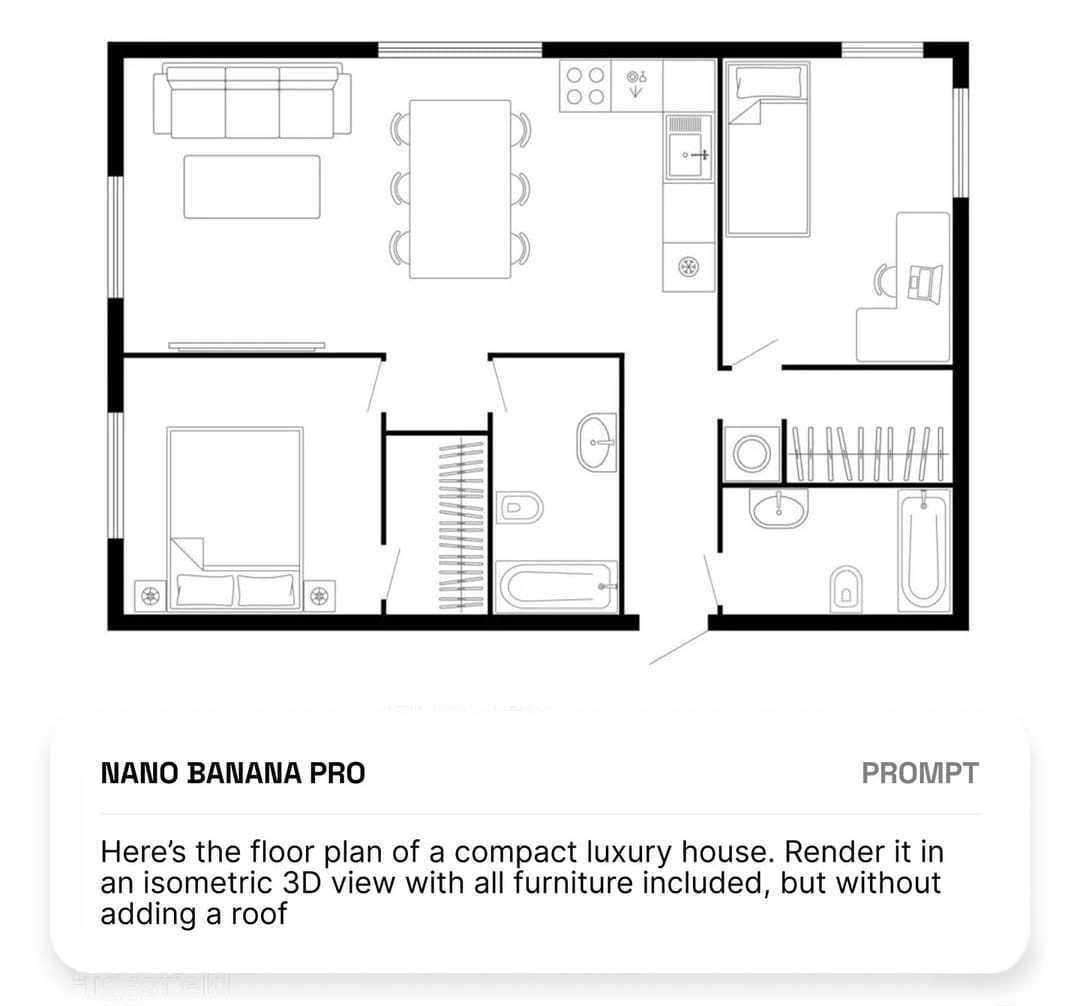
It is now possible to transform the style of an image without hallucination, to perform “surgical” modifications—such as replacing an element without altering the rest—or to have text, images, and technical constraints interact coherently. This capability opens up use cases that were previously difficult to industrialize: generating a dress pattern from a photo of someone wearing it, producing a patent diagram from a real product, transforming 2D interior design plans into usable 3D renderings, or even proposing technical plans from existing photos and documentation.
We are no longer just talking about visual creation, but about a true AI-assisted design tool, capable of understanding, reasoning, and producing with a level of fidelity compatible with professional uses.
— Lucas N
Nano Banana Demonstration:

Autonomous Agents and Virtual Worlds

AI Agents mark an evolution in our digital habits in 2025. Unlike classic AIs that just chat, agents are capable of taking action to accomplish concrete tasks. In parallel, technologies like Genie 3 (Google DeepMind) allow for the fluid creation of interactive virtual worlds.
This transition is modifying office work, as AI is starting to integrate directly into office tools to act on our behalf. For creatives, this means it is becoming possible to build entire immersive universes without needing to master complex technical software.
On a societal level, this movement automates repetitive missions, following a trajectory already seen in agriculture or industry. This evolution raises questions about the future of professions and contributes to the tensions observed in the current labor market.
— Alexandre Z
The Chip War: The Workstation Becomes a Personal AI Station
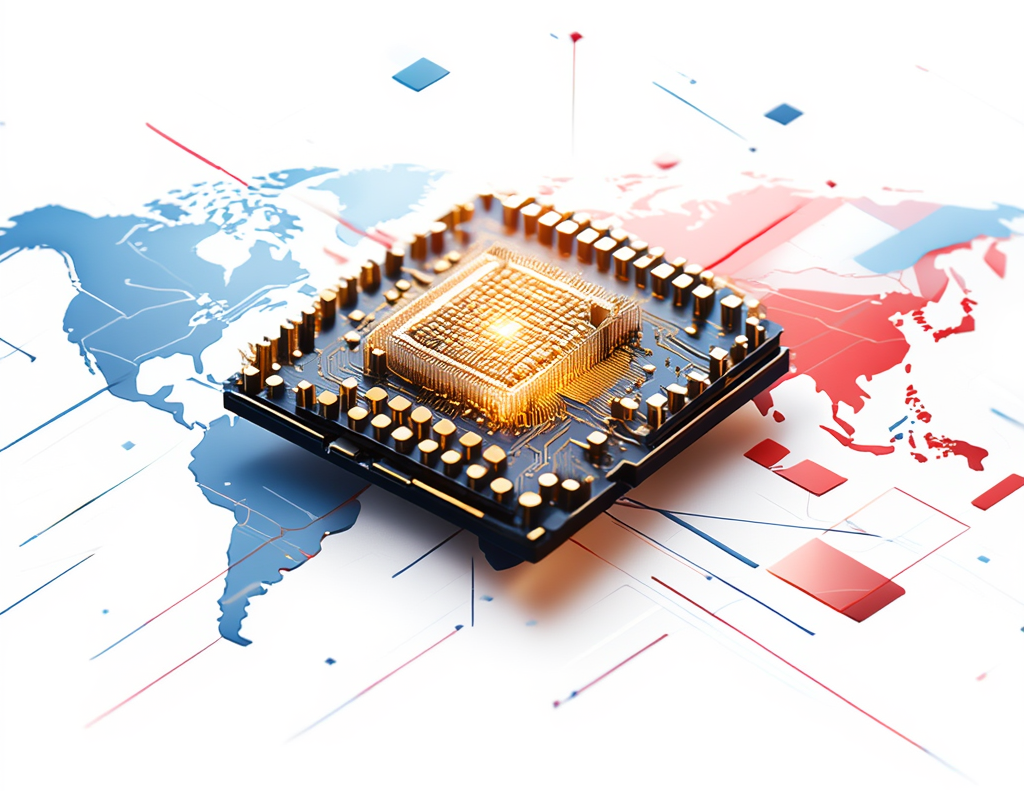
A new phase of the Chip War. Nvidia has maintained its hegemony with the launch of the RTX 50 series (Blackwell architecture).
The RTX 5090, released in January 2025, is no longer marketed just as a graphics card for gamers, but as a true personal AI workstation.
This positioning is strategic: it allows researchers and creators to run significantly sized models locally. This evolution reduces dependence on the cloud. It is an interesting trend from NVIDIA, which now places as much importance on AI as it does on gaming.
— Loris
The Operational Maturity of Multi-Agent Systems
In 2025, multi-agent systems mark a milestone in AI’s operational maturity. Organizations are no longer satisfied with conversational assistants: they are now deploying agents capable of acting autonomously, coordinating multiple tasks and integrating into complex workflows.
The emergence of increasingly high-performance tools such as CrewAI (development tools) or n8n (no-code tools) is strongly accelerating this adoption. These tools make the creation of specialized, orchestrated and robust agent chains more accessible. This evolution paves the way for much finer automation of business processes, with concrete gains in efficiency, reactivity and execution quality.
— Jean-Benoît
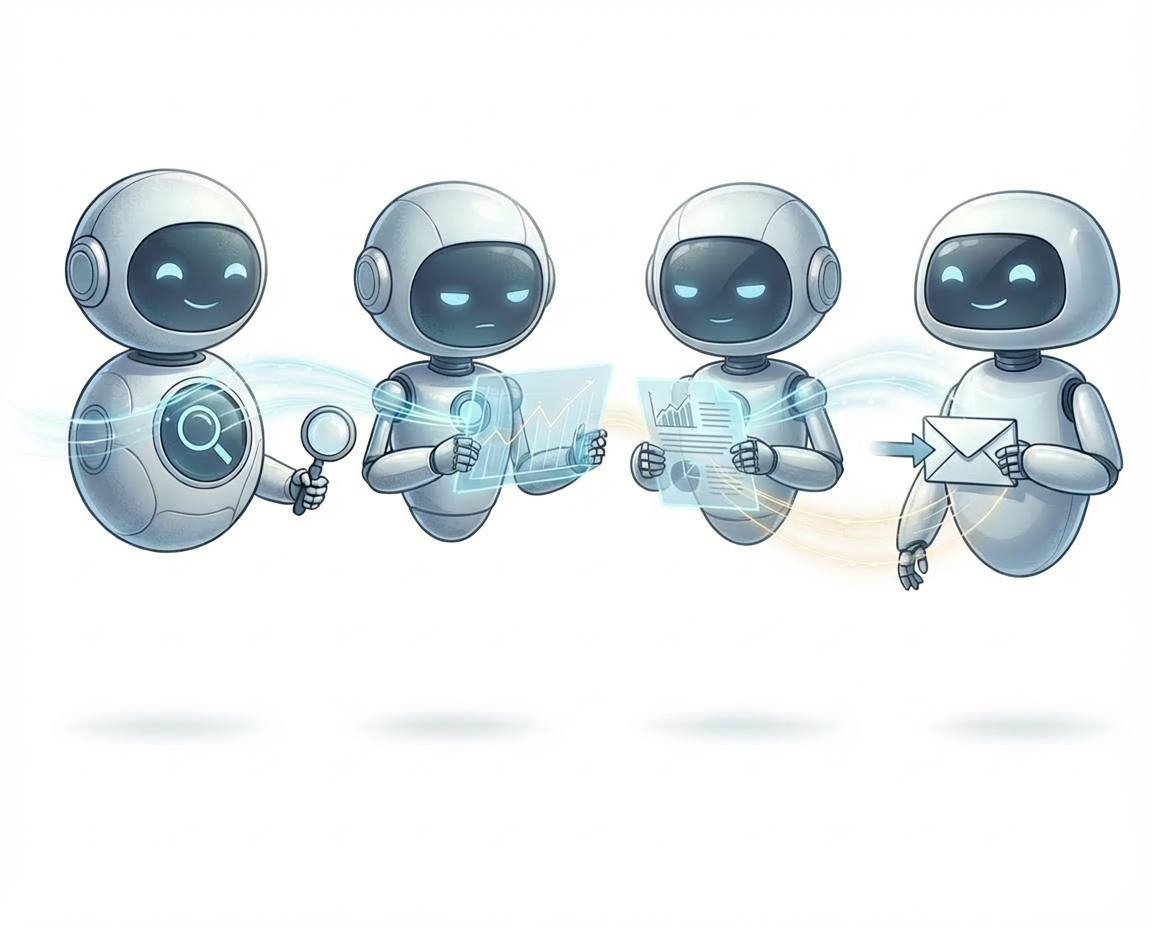
The year 2025 will be remembered for its ambivalence: on one hand, spectacular democratization and performance (GenAI, Agents, Personal AI Station). On the other, structural challenges (Sovereignty, Audio) remind us that the road to technological maturity is still long.
The most profound change, however, is that AI has stepped out of its role as an assistant to become a sophisticated execution tool, capable of action in gaming, business, and even government.
This transition imposes a truth for 2026: AI will no longer be a simple question of technology, but a matter of strategic choice and human responsibility for every organization.
